Sophie Llewellyn Smith is a conference interpreter with 15 years' experience of interpreter training. On her site theinterpretingcoach.com, you will find eBooks and eCourses to help you consolidate or update your interpreting skills in areas such as note-taking, research skills, analytical skills, and retour interpreting (working into a B language). Each course breaks the skills down into manageable sections and uses a mixture of text, audio and video to examine underlying principles and work on practical exercises. In this way, you can use self-study at your own pace to target your weaknesses, improve your performance and become more marketable.
You are a campaigner for a ban on plastic items such as drinks stirrers, straws, and cotton buds. You welcome the UK’s announcement that it plans to ban these items, but you believe we need to go much further and look at legislation to tackle all forms of plastic packaging.
Prepare an introduction to your speech, giving your background, the current legal situation, and any other background you think is relevant.
Choose Option 1 OR Option 2.
Option 1: time is short, and time has been wasted
Explain why it is urgent that this ban come about soon. Use several idioms and phrases to indicate the urgency of the situation, and back up your points with some facts and figures (e.g. about plastic waste in the sea).
Point out that the UK could have acted much faster in proposing legislation on this matter, and will now have to make up for lost time. See if you can come up with some reasons for the delay.
Option 2: this proposal comes just in time; the EU legislation will be too late
Explain why this proposal comes just in time – because the EU is about to legislate, but the EU legislation will be too late for Brexit-related transposition into UK law. At least if the UK legislates now, it will keep in step with EU environmental legislation.
Use several idioms and phrases related to time, and some facts and figures to back up the urgency of the situation (e.g. about plastic waste in the sea).
Conclusion
Conclude your speech with a call to action about future, broader, legislation on plastics in general.
Vocabulary assistance: how to talk about…time
Here are some tips to help you talk about time: time passing, time being short, getting things done in time, etc. etc.
The time is ripe
Here is a collection of phrases to express the idea that it’s the right time, or perhaps past time, to get something done:
It’s about time… Curiously, this can mean either that something needs to happen immediately, or that it is now happening, but should have been done sooner.
It’s about time the government provided more funding for mental health services.
It’s about time they tied the knot – they’ve been together for 17 years!
It’s high time…. This phrase is synonymous with ‘about time’ (see above), but a little more emphatic.
There’s no time like the present! The meaning of this phrase is ‘now’, ‘immediately’.
‘When would you like me to start working on the project?’ ‘There’s no time like the present!’
The time is ripe for… means the time is right, the timing is good.
The time is ripe for a remake of this classic film.
Being short of time
Let’s imagine you’re interpreting at a meeting, and the agenda is very long. The Chairman might say one or all of the following:
I’m just keeping one eye on the clock, because we have a lot to get through this morning.
Time flies! It’s already 11 o’clock, so we need to wrap up this point.
Time is marching on, and we need to move on to the next agenda item.
We’re short of time today, so we’ll have to come back to this proposal next week.
We’re a little pressed for time, I’m afraid. Perhaps we could discuss this bilaterally.
In the interests of saving time, I won’t read out the whole document.
What if there is a sense of urgency about a proposal/piece of legislation/action on the part of the authorities? Try:
Time is of the essence with this proposal: it will be discussed at the Plenary in a fortnight, so we need your written comments by Monday evening.
There’s no time to lose. We need to act immediately.
We’re in a race against time. Our competitors are ready to move on this, so we need to make our offer immediately.
The emergency services are working against the clock to reach earthquake survivors under the rubble.
It’s crunch time! Something needs to be done urgently.
Desperate times call for desperate measures.
If time has been lost for some reason (delays, illness of the project leader, documents lost in the post…), you might say:
We’re working around the clock now, to make up for lost time.
If there is no great urgency, you might say:
All in good time. We don’t want to be too hasty.
We have all the time in the world, as there’s no deadline.
Just in time
If something was done/adopted/achieved at the last possible moment, you can use the following phrases:
at the eleventh hour: The Parliament was still proposing changes to the Bill at the eleventh hour.
in the nick of time: We arrived at the airport in the nick of time; the flight was just about to start boarding.
If it’s too late, you might say:
Better late than never!
Miscellaneous
in no time means ‘very quickly’: the revised proposal was ready in no time.
to make good time refers to a journey, and means it took less time than expected. We’ve made good time, so we can afford to stop for lunch before hitting the motorway.
ahead of its time means radical, innovative (for the time): The play explored ideas about prejudice and tolerance in a way that was ahead of its time. The company was ahead of its time in its employment practices.
before my time means before I was born, or before I was old enough to understand. Margaret Thatcher and the poll tax? That was all before my time.
to buy time means to delay an event so as to improve your own position in the meantime. I bought some time by telling my supervisor I was ill. He postponed the essay deadline by two days.
to call it a day means to stop for the day, even if you haven’t finished what you’re doing. OK, we still haven’t covered Item 5 on the agenda, but it’s 6 o’clock and we’re all tired. Let’s call it a day and reconvene tomorrow morning.
in time vs on time. What’s the difference? ‘On time’ means at the pre-arranged time, e.g. The meeting began on time, at 9 o’clock. ‘In time’ means before a deadline, before something begins: he arrived in time for the beginning of the meeting. He turned up just in time for the beginning of the speech. Imagine a meeting that begins at 9 with a presentation by an invited speaker, but the speaker starts a few minutes late. You could say: I didn’t arrive on time, but I was in time for the presentation.
Last few…
To stand the test of time means to remain popular or in force for a long time.
The US Constitution has stood the test of time.
Few pop songs of the 2000s will stand the test of time.
Time will tell is an incredibly useful phrase. Will a proposal be adopted following a round the amendments? Will the public support a groundbreaking idea? Will Donald Trump be booted out? Will the UK really leave the EU? Time will tell.
I haven’t mentioned it so far, but the adjective timely can prove useful. It means ‘happening at the best possible moment’ and can be a good translation for words like ‘opportun’ in French, for example.
The protests in London at the weekend were a timely reminder that this is still a controversial issue.
The change in the exchange rate provided a timely boost to the company’s falling profits.
Your comments on the proposal are very timely. We’ll amend the text as soon as possible, since the deadline is next week.
Finally, don’t forget a week is a long time in politics.
Wondering what it took to organise an international online summit for interpreters, with interpretation into 9 languages?
Keen to know more about what it was like working with Green Terp?
Curious about what it was like to manage all those amazing speakers?
[hint: it was like herding cats…]
Read on…
TerpSummit 2022 in figures
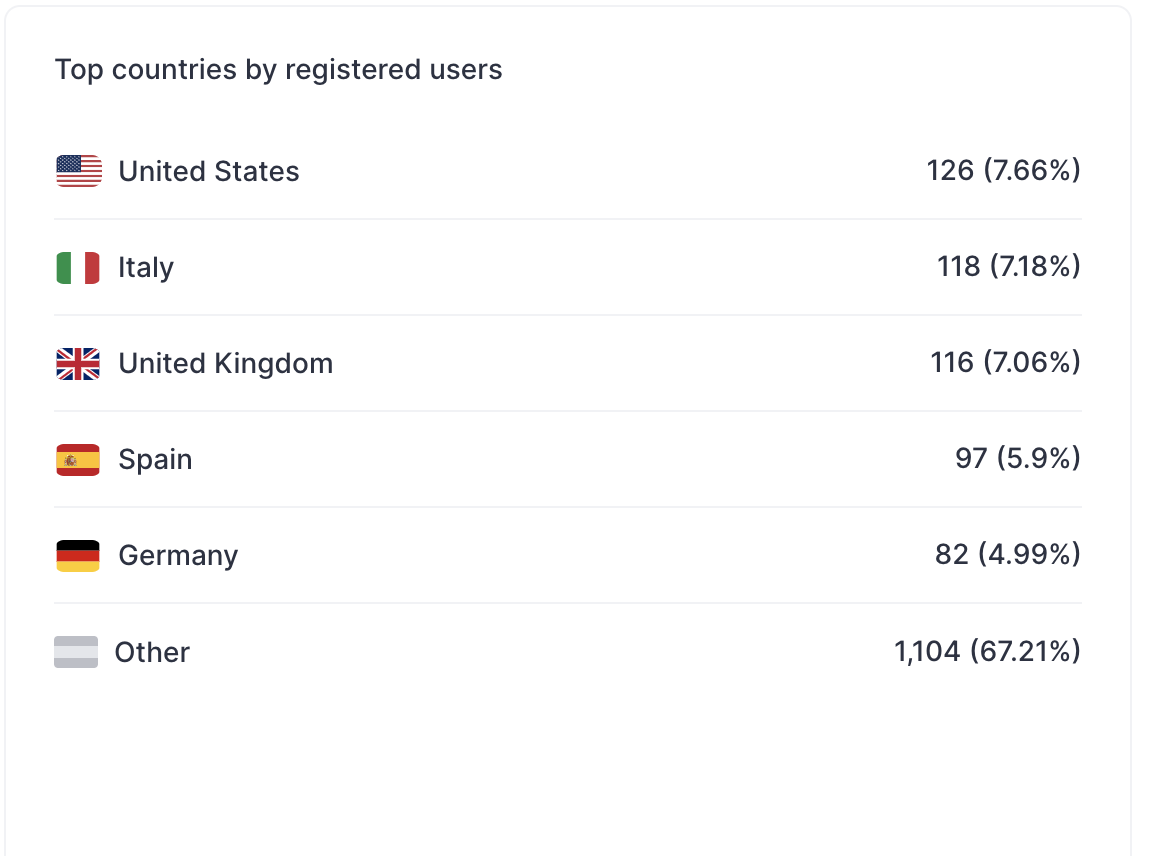
registrations: over 3,400 (this includes people who attended the live event, as well as those who registered in order to watch on replay).
Hopin registrations: 1,643 (i.e. people who registered for the live event).
Peak attendance: 517 – this stayed relatively steady across the 3 days, but may have been affected by the AIIC General Assembly and various other meetings taking place during the same week.
Average time spent by attendees at the live event: 8 h 15 minutes (!).
Number of speakers: more than 50, in fact. But that wasn’t entirely deliberate 😊. Some of the more last-minute additions to the programme wanted to have a panel-style discussion, which bumped up the speaker numbers.
Number of urgent phone calls during the summit from speakers who had technical problems or couldn’t find or enter their Session: 3.
Sponsors: 9, who contributed in kind with prizes for the draw; some of them also gave presentations about RSI platforms.
Room hosts: 4. They helped introduce the speakers, run through the interpreting arrangements at the beginning of each session, and answer technical questions, so I owe a big thank you to Roxane Hugues, Camelia Oana, Silvana Vulcan, and Clara Campero. A truly international team based in the UK, Romania, and Argentina.
Interpreters: 80 interpreters including standbys, dropouts and those who actually interpreted. Plus a 7 person tech team.
Number of Zoom meetings with Laura Holcomb (interpreting coordinator): at least 7, of which one was a meeting with a tech guy from Hopin. I also attended 4 GreenTerp/Hopin rehearsals for the interpreters. And we talked on WhatsApp and emailed a lot!
Here are some insights from Hopin:
The tech
I kept this pretty simple.
The live summit was hosted on Hopin. I chose this platform last year for the first TerpSummit because of its powerful networking features, as well as the ability to run parallel sessions, which I would not have been able to do on my Zoom account. Since then, Hopin has had very significant investment, and I found it more stable and a touch more user-friendly this time around.
The two websites, hosting the TerpSummit pages (registration, schedule, ‘meet the speakers’, etc.) and the Interpreters’ Toolkit for Success (recordings, bonuses), are WordPress sites.
I used Airtable extensively to keep track of what needed doing, collect material from speakers, gather feedback etc.
I held quite a few meetings on Zoom to co-ordinate with the room hosts, Laura (the interpreting coordinator), or speakers.
I used Vimeo to host and record videos, and Screencast-o-Matic for captioning.
Once or twice I used Dropbox to transfer large files.
I hosted some materials (slides, PDFs) on Google Drive.
My CRM (i.e. the mailing system that communicates with people who’ve registered) is Drip.
I used Acuity as a scheduling tool.
How could I forget WhatsApp? I had 3 main lines of communication going: with Laura, with the interpreting Tech Support group (so I could keep an eye on potential issues), and with the Room Hosts – this was the busiest group, with quick-fire questions, technical help, words of encouragement, and the occasional venting about impatient attendees. Oh, and a few pet photos. 😉
As you can see, I didn’t go overboard with complicated tech (although I’ve spared you the details of the plugins I’ve used in WordPress, etc.).
The interpreting
When I decided to run a summit in 2021, there was a lot to think about: finding the right speakers, building the websites, working out how to charge (or not!), researching live event platforms, deciding what I could afford…There was no way I could add interpretation into the mix, even though it galled me, as an interpreter, to organise a monolingual event.
For TerpSummit 2022, I wanted to at least look into the possibility of offering interpretation. I did this for several reasons: accessibility for those who can’t follow some of the speakers in their mother tongue; trying to move away from a Eurocentric, anglocentric event; offering the whole interpreting community an opportunity to try out one of the remote interpreting tools; and just because I felt it was the right thing to do!
I was talking to Laura Holcomb on Zoom sometime in November about giving a talk on consecutive note-taking in healthcare settings, and we got on to the subject of offering interpretation at the summit. I feel very fortunate that she was enthusiastic about the idea; more, she offered to co-ordinate the interpreting arrangements.
We’ve had some time to think about the outcome since then, and overall I think we’re very happy that we went ahead with this very ambitious enterprise. Laura reached out to Dr Bernard Song from Green Terp because the idea of a system designed by interpreters for interpreters appealed to us, and I’m very grateful that Bernard came on board and worked incredibly hard (from a difficult time zone!) to make sure that the GT Booth system was ready for an event involving 9 languages (English, French, German, Spanish, Italian, Portuguese, Mandarin, Arabic, Russian) – the GT extension for Chrome and Firefox was released just before the Summit.
I’ve asked Laura and Bernard, as well as some of the volunteer interpreters, to share their experiences – both highs and lows, because there were definitely some lows! – with us. You will find their replies to my questions below.
Debrief with the interpreters
We held a public Zoom session to ask the interpreters what it was like using Green Terp.
Here are the questions we asked:
1. How long did it take you to prepare for TerpSummit? (Including familiarising yourself with the tool (GTB) and materials such as slides/videos). Anything particularly interesting or different that you noticed during the process?
2. Many of you have worked on other RSI platforms. What was different about working on GT Booth compared with other RSI platforms, in terms of functionalities, training, technical support or tool friendliness?
3. What are the potential improvements you would like to see interpreter team make-up and organisation, training, tech support or tool functionality?
4. What was a challenge you overcame successfully or your favourite part of the experience in general?
Working with Laura Holcomb and Dr Bernard Song
What made you want to participate in TerpSummit?
Bernard: I participated the first TerpSummit last year, and I thought it was a brilliant idea. We interpreters as a community tend to work in small groups and socialise within the region of our domicile, but never had such a chance to meet up on a global scale prior to the pandemic (that’s a blessing of this pandemic!). It is a brilliant opportunity when Laura mentioned to me that you two were considering adding interpretation to this summit, to get involved and contribute to such an occasion. As an interpreters’ event, why can’t we have it interpreted?
Laura: I had seen a bit of your work and respected you, and it, very much as a colleague. That’s a good starting point for wanting to be involved—admiration and attraction to a certain type of leadership. That was further bolstered by your willingness to put on a free summit. I loved the initiative and am always looking for meaningful ways to contribute that might expand my horizons at the same time. In this case specifically, I would be involved in cross-ocean work, would be given a chance to hop out of my silos, and would be working to steady interpreters with a new tech tool, a tool that was not only new to me, but also in the final stages of beta development.
Finally, I thought it odd that interpreting conferences didn’t actually have interpreting. Sometimes presenters would be speaking their third or fourth language. Some can manage this quite easily but I was not raised bilingually and so have accepted that I will probably forever be more dynamic as a presenter in my mother tongue. I imagined there were others in my shoes with something to say, as well as interpreters who might not have English in their combination.
Furthermore, at first blush, it actually didn’t seem like it would be a big deal. I have, by now, a solid base and a bit of a fondness for organizing interpreters and working with them in unfamiliar tech environments. So starting with “oh, this will be no big deal” gave me the courage to stretch. And stretch I did!
[Sophie: I think Laura and I both had moments when we thought we had bitten off more than we could chew…but I had gone with a ‘go big or go home’ idea, and I thought it was worth seeing it through, even if the result on the day wasn’t optimal. After all, this is the reality of working with RSI].
How did you go about planning what needed to be done?
Bernard: Together with Laura, we planned for the training/orientation of the interpreters, and I helped recruit and train part of the Chinese booths. Laura did most of the work in planning and organising the team really, and I tried to support with technical resources. It is definitely an overwhelming job to organise such a large team, with last min dropouts and signups, interpreters with different tech levels.
Laura: The steps in general are by now quite automated in my head: see who is interested (whatsapp groups, ask around), collect basic info from volunteers, as well as tech info (headset, connection, mac vs pc, etc.) and understand the volunteers’ motivations. This last bit helps me better tailor my communication and support (for all this I used a google form which is great for anything informal and the answers then feed to a google sheet that I can easily organize, sort and tinker with).
Then, the next step was to demo the platform to ease in gently (I used calendly to set up different time slots. This was a bit of a guessing game at first due to the different time zones and work demands of the varied group. I ended up having to do a few extra demos to accommodate latecomers or tight schedules).
I knew I wanted to follow this up with a full rehearsal to give myself, interpreters and techs a bit of actual hands-on practice as a group, and test relay, in particular. So I created a couple more rehearsal slots for this.
While time marched forward, a circular scheduling management process hummed along in the background (another google sheet). I had at least had a good primer on this with all the scheduling management I have done for co>lab and Lab7 Healthcare—two fairly complex peer practice based intensives, the latter involving 150 medical students coming in and out of the doors of a virtual meeting space.
From there, the booth schedule morphed into an interpreter dashboard where I organized essential links, posted the most up-to-date speaking schedule for each day and shared interpreter contact information. Without the dashboard, an easily updatable, centralized repository, I would have been lost.
We also created a WhatsApp support chat that I knew would be essential for off-platform, quick communication. Some of our China-based colleagues don’t have access to WhatsApp and depend on WeChat. But I couldn’t access WeChat from Guatemala so we had to have some intermediaries!
Alongside this was the task of organizing the tech work. I called in some friends and colleagues and tried to do some organizing, but this part was tough—all busy, in-demand professionals. But it all worked out because this group was very happy to and capable of practicing on their own.
Those were the basic nuts and bolts.
[Sophie: the dashboard was a fantastic tool, which kept all the relevant information in one place, so the interpreters could see the booth schedule, important links (Hopin, speaker bios), and materials (slides, PDFs) very easily, and everyone else (techs, Laura, Bernard, and me) had contact information to hand.]
What did it take to pull this off?
Bernard: Regarding the GT technical side, we did two major upgrades on the interpreter end (Auto-Relay) and audience end (GreenTerp Extension) under time pressure. We had a server issue identified in the first formal rehearsal and quickly resolved that. So in the end, we had a stable server running that is able to support up to 10k audience and 10 booths.
I under-estimated the time commitment, to be honest, but I never regretted it. If you ask me to choose again, I would say yes for sure. I didn’t use any time trackers, but I did work late every day to make sure that GT Booth is as smooth and easy to an interpreter, as an iPhone to a consumer. Working at odd hours is unavoidable when we need to train and collaborate with colleagues from different time zones, but it was an unforgettable and worthwhile experience.
Laura: This work was pretty much my full time job beginning Dec 6th and running through the Summit. I was able to work in some other professional commitments as needed, and decently able to take two weeks off at Christmas while traveling to see family, which was wonderful and quite important, but the bulk of my time went to getting everything and everyone situated, as best I could.
[Sophie: I reached out to a few speakers in July 2021, and started planning in earnest in September. From mid-November onwards, the Summit takes up all my available ‘spare’ (ha!) time and more. It displaces some other professional activities such as coaching or working on e-courses, runs on into the evenings, and continues for around 4 weeks after the summit. What seems like 3 intensive days to outsiders is actually nearly 3 months of work for me.]
Biggest challenge?
Bernard: The server failure in the first rehearsal, but that was a good stress test, so we were fully prepared afterwards. There were other challenges behind the scenes, with our superb technicians team (Laura, Ernest, Tamber, Amy, Yang), we pulled it off.
Laura:
Time zones are a challenge, such a concrete challenge, so not much to be done. You overcome it with teamwork and compromise. For demos and rehearsals, I tried to offer varied slots that would have a good chance of being accessible in at least two time zones per slot. Mic checks had to happen an hour before start time which meant a very early wake-up for me here in Guatemala. This challenge was overcome by asking for some extra help from my awesome partner Byron to take over the family duties. Plus, others such as Ernest and Dr. Bernard were making the same effort, so it was nice not to be alone on that front. In the future, this could be better overcome by getting tech coverage in a more amenable time zone. Even then, it is what it is. I would want to be there come start time in any case.
Working with a developing platform and different levels of tech comfort. An inclusive environment was important to me on the tech front. Because I work with so many interpreters on this, I know tech can be a challenge, but I also know we are all capable of learning—and learning was one of the points of picking a newer platform. We overcame this by titrating out the intro to the platform: watch and absorb the videos, let’s demo now and just walk through it, okay, now on to the rehearsal. Normally any tech barriers can be overcome by just spending some extra one-on-one time with folks, but here the problem was that I truly didn’t have that time. However, by and large, the interpreters who signed up for this charge were steady on their feet and tech amenable. And I was grateful for that. In the future it might be useful to make it clearer to myself that this is not the environment best suited for learning or even practicing basic tech skills in themselves (a good tech course would be a much better set-up for success!), but see it more as a good chance for those who already have solid tech footing to expand their reach.
Turnover. We had dropouts for a variety of reasons; people we had been investing in since December. This was overcome by a bit of sweat equity, teamwork and some agile folks stepping in at the last minute. Some interpreters pitched in with extra shifts to reduce the number of last minute GT trainings we would have to do. Ernest went above and beyond to help me do some of the last minute fly-by-the seat intros to GT for new interpreters filling in. For next time I am thinking this might have been better mitigated by staffing three-person booths from the outset, instead of the two-person booth that I am more accustomed to.
What did you get out of the experience?
Bernard: Laura and Sophie, you two had faith in me and in Green Terp with our new product, and supported this ambitious plan to take shape step by step. I also learned a lot from you guys on organising such a large event, with so many interpreters, and the amazing technicians team that is comprised of interpreters too! These are the most valuable part of the experience involving in this event. I really believe in the mantra that the more you give, the more you will get.
Laura:
I was privileged to work with a whole bunch of really kind, highly competent colleagues. Many of which I did not know ahead of this experience.
I learned more tech skills, because this is inevitable when working with a new tool and a new set of people.
And, I will be honest, I am a, let’s say, small deal, and do not typically manage 8-language events, over multiple days, with this many interpreters. So being part of something of this scope will certainly make me more efficient and better prepared the next time around, for large and small events alike.
And quite importantly, I learned what it’s like to put your everything into something and still not quite know if it will turn out okay at all. To really not know. And to give that up to the world of things that are out of my hands.
I got to be a part of some pretty selfless giving on all fronts – a free summit (incredible!) organized by Sophie entirely on her own “time dime”, plus a volunteer platform, techs, interpreters and speakers. A lot of people coming together to share. Just because. That’s special.
[Sophie: I can relate relate to Laura’s point about putting your all into something and not knowing if it will work. Hosting a live event like this is seat-of-your-pants stuff: it’s really exciting, the energy is phenomenal; but it could go horribly wrong at any time…Definitely not my natural comfort zone! But as Chris Guichot de Fortis would say, if you want to walk on water, get out of the boat!]
Attendees’ impressions
I sent out a feedback form after the Summit to ask attendees about various things: their favourite presentations, suggested topics, etc.
One of the points I was most interested in was attendees’ views on the interpreting arrangements: was it worth doing? Did they actually use interpretation?
I won’t give you a detailed breakdown of the replies. Instead, I’ll summarise.
Around half of respondents found GT Booth convenient, with only minor issues (the most problematic part was when we had multilingual sessions with relay. The audio quality suffered in booths working on relay.)
Around half of respondents didn’t need or didn’t use interpretation.
However, the interesting thing, as far as I’m concerned, is that over 3/4 of respondents felt that offering interpretation at the summit was worthwhile (even if they didn’t use it!).
The reasons are neatly summed up in this response:
“Yes, it’s worth it to expand the range of speakers, to avoid a Western-centric view of the world, to offer practice opportunities and makes us be users of interpretation for once, which can be very enlightening.”
Will there be a next time?
Well….
When the live event is taking place, TerpSummit is very exciting! It’s fantastic for me to see interpreters learning from one another, coming together from all around the globe, being supportive, having an opportunity to make new contacts.
I can’t say enough how grateful I am to everyone who made the summit what it was: Bernard and Laura, the techs, Room Hosts, interpreters, speakers…and the audience!
As you will hopefully have realised from this blog post, it’s also a big task in terms of organisation.
This year, I again have to digest the outcome and decide if running the event is worthwhile for me, personally, professionally, and financially.
Some of the issues for me to consider are:
am I confident that I can gather the best speakers, who have a really useful contribution to make on relevant topics?
am I satisfied with the pricing model – does it cover my costs (a live event platform like Hopin costs in the thousands of euros, just sayin’); is it too much work offering the Interpreters’ Toolkit with all the bonuses? This is something I’ve explored through the feedback form, and the responses haven’t necessarily matched my expectations!
would I offer interpretation again (for some sessions? All sessions?)
There are many more, which I will spare you. Thank you for reading, and do comment below!
p.s. for anyone who’s disappointed that the title ‘BTS TerpSummit and GreenTerp’ on the video above didn’t actually mean that BTS were involved in any way 😉, here they are being smooth like butter:
English: an essential part of many interpreters’ language combinations.
And English is all around us, so it should be easy to maintain….right?
Well…maybe you’re so used to hearing Globish at work that you struggle when Irish, British, American, Indian, or Kenyan speakers take the floor.
Or maybe the multitude of different accents and variants of English you hear is stressful when you’re interpreting.
Or perhaps you can access plenty of suitable practice material, but you’re short of time and you’d like a shortcut.
A few months ago, I launched a new series of modules focusing on English, along with my colleagues Catriona Howard and Kirsten Coope.
We’ve had some great feedback about the materials (called E4T: English for Interpreters), which are intended to give you a helping hand with improving your English C (or B!); but we’ve also had questions about how to make the most of the materials, and what the content of the modules actually consists of.
I thought it might be nice to give you an E4T taster, with a peek behind the scenes of several modules, along with some tips on how you can make the most of the content.
What’s in each module?
Each module typically contains:
3 tailor-made practice speeches, prepared by yours truly, Catriona, and Kirsten, on the topic of the month. Each video is captioned and comes with a full transcript. You’ll also find a short introduction and some terminology that you can choose to research before tackling the speech, or to ignore if you’d rather tackle it without preparation.
3 carefully selected ‘real life’ speeches representing a variety of accents and viewpoints. These could be panel debates, TED talks, interviews, lectures, etc. Again, we give a brief introduction, some terminology, and often some guidance on how to tackle the speech – or a suggested focus.
a reading exercise (often, this is a reading comprehension), based on a relevant article or paper.
a listening exercise; this could be based on one of the practice speeches, or a podcast or lecture. The exercise might be a listening comprehension or some other exercise to practise analysis, for instance.
a note-taking exercise to practise note-taking technique or symbols.
a ‘resources’ section with more suggestions for audio or video practice material and further background reading.
an Excel glossary template containing key terminology, vocabulary that comes up in the speeches, and any relevant idioms.
We’ve tried hard to reflect a variety of viewpoints and accents in each module, and to cover the key terminology that you need to know in order to interpret successfully.
Oh, a very important point: if you decide to purchase one of the modules, you will have indefinite, on demand access.
This is not the kind of material that you can only access for 6 months or a year; you can dip in an out of the modules whenever you like – your access is permanent (as long as my website continues to exist!).
Now, what can you do with all of this? The answer will partly depend on whether your English is a C or a B language.
If your English is a C
Here are some ideas:
fill in the glossary templates with your A language equivalents and learn the vocabulary.
Use the caption function to check your understanding of a tricky speech.
If you struggled with sections of a speech, read the transcript afterwards.
Use all the consecutive speeches for note-taking practice.
Improve your background knowledge by going through the additional resources.
Prepare for an exam by going through all the materials, in the order they are given (roughly in order of difficulty).
Prepare for a mock conference, volunteer gig or assignment by practising with the simultaneous speeches.
“Read through the speech transcript provided and find different ways of expressing the words/ phrases listed below in the text. If you would like to take it a step further, or are working on an English B, why not come up with a third (or fourth!) option. I have provided some suggestions in the answer table below. As it is quite a long list, I have split the exercise in two. The first section takes you up to: “Through an ambitious new biodiversity framework, under which commitments are made and actions taken by the whole of government, economy and society.”.
You may also like to spend some time producing a version of the speech in your mother tongue. Approach the task as if it were an interpretation (i.e. don’t produce a translation) but take the time to come up with idiomatic solutions in your mother tongue that really reflect the nuance of the original.
There is plenty of useful climate-related vocab in the text too, especially in the second half. Oh and finally, in case you spot it, the correct word is “disproportionately” not “disproportionally”!”
No good here here but I couldn’t help stick in “engine of change” as an expression/ collocation.)
our only choice is to
we have no option but to
we must
are being implemented
are coming online (I particularly dislike this expression, though it’s very common!)
are coming into force
speeding towards
hurtling towards
heading at full speed/advancing or moving rapidly
the crux of the matter is
the bottom line is
ultimately/the upshot is
predominantly
primarily
mainly/fundamentally
ambitious targers
lofty ambitions
ambitious/bold (?) goals
crucial for
critical to
essential for/required by
production
output
yield (?)
domestic
intrastate
internal
throw away
discard
throw out/reject?
limited resources
finite capacity
limited means
modify our behaviour
change our ways
adapt our behaviour/operate or do things differently
Section 2
further developing
scaling up
increasing/stepping up/intensifying/expanding
extract
gouge
scoop out/violently remove
strained
stressed
put pressure on
resulting effects
attendant impacts
resultant/accompanying effects
are ongoing
are underway
there are currently efforts
amounted to
stood at
accounted for
is developing
is unfolding
is appearing
a significant barrier
major impediment
substantial obstacle
encourage
drive
push
gradually eliminating
phasing out
progressively removing
transferring
shifting
moving
open up
unlock
provide
be successful in the longer term
stick
be permanent/long-lasting
phase out their activities
wind down
reduce their activities/gradually shut up shop
incorporating
integrating
including
If your English is a B
Here are some ideas:
look out for the exercises that are specifically designed for English Bs in the module.
If your intonation and pronunciation need work, why not do a little bit of shadowing with one of the tailor-made speeches?
Use the reading exercises as an opportunity to pick up new idiomatic phrases in English.
Use the glossary as a shortcut to make sure you know the key terminology in a particular subject.
Use the tailor-made speeches as material for a reformulation exercise (EN>EN simultaneous). See how versatile your English B is by looking for alternatives and synonyms.
Take EN>EN notes and check that you have good symbols and abbreviations.
Here’s a taster of a simultaneous speech, from the module on taxation (available 1st October).
Sample tailor-made speech – tax module
If you’re a trainer
You are welcome to use E4T materials in the classroom as a teaching aid.
Please credit us, and don’t share your login details as this compromises the security of the site.
If you’d like a whole cohort of students or trainers to be able to access the materials in their own time, please contact us for pricing.
Here are some ideas for you:
If you have a topic of the week at your institution, your students could listen to some of the material in the Resources section to prepare.
Pick one of the exercises (reading or listening) for your students to do before class as preparation
Use one of the tailor-made consecutive speeches in class when you’re teaching consecutive.
Give your students one of the exercises or speeches to do as homework.
Use the speech transcript to help you when listening to students work in simultaneous.
The source material for this exercise is a podcast called ‘Science vs’. The episode I’ve chosen is called ‘Vaccines – are they safe?’, and I’ve chosen it for two reasons: the presenter has an Australian accent, and her presenting style is quite informal (click on the image to access the podcast).
Vocabulary and comprehension exercise
Listen to the podcast between -23.35 and -8.21. This section begins with ‘There’s another idea about how vaccines could be causing autism: Mercury. Mercury… is sometimesused as a preservative in vaccines… in a form called thimerosal.’
Listen out for unknown or interesting words or phrases.
Read the following list. For each word or phrase, consider a) if you could give a definition, b) how you would render this in your A language, c) whether you know any synonyms in English. Do they have the same register or connotations?
The presenter’s style in this podcast is very conversational. In places, she uses informal register.
Try using the podcast as a reformulation exercise. Start in the same place, and go all the way to the end of the podcast. See if you can raise the register so it is more formal.
When you’ve finished, think about what phrases you changed.
You may have changed scary, a big deal, kooky, freaking out, whack-a-mole game, and ‘do they stack up?’. You may also have changed ‘a bunch of’ and ‘WAY more than’.
In British English, ‘kids’ is fairly informal as well, although it is much more common in American English. As a British English speaker, if I wanted to be more neutral or formal, I would have changed ‘kids’ into ‘children’.
Where to find E4T
Here are the modules we’ve published so far. Just click on the links to find out more or to purchase.
We publish a new module on the 1st of each month. Our next module, on taxation, is due for publication on 1st October.
I hope you’ve enjoyed this brief E4T taster. Let us know in the comments if you have any questions, or if you’d like to suggest a topic for a forthcoming module!
The speech is long for a consecutive, but not particularly complicated. It only contains one figure.
There are several ways you could use it to help with your English retour:
Take notes from part or all of the speech. Then reformulate the speech in English.
Do the speech in simultaneous (EN>EN). Decide in advance what you’re going to work on:
‘chunking’ (salami technique): break the sentences up into shorter pieces.
editing/being concise: leave out redundances, try to summarise long-winded ideas.
reformulation: look for alternative phrasing and synonyms.
Remember to record yourself, then go back and listen to your performance. Are there infelicities in the use of English? What could you have said instead?
——————————————————————————————————————-
Interested in more material like this to help you boost your retour? Why not join my monthly membership site, Rock your Retour, with tailor-made written materials and weekly live group classes (online)?
Sophie Llewellyn Smith, writing as The Interpreting Coach, is a coach, interpreter trainer, conference interpreter, designer of online teaching materials, and creator of Speechpool. Follow the blog to pick up tips on how to improve your interpreting skills.
The purpose of this exercise is to help you work on the versatility of your English B and on deducing meaning from context and applying background knowledge.
I have chosen a short excerpt from a Guardian article, and blanked out some of the words.
Your task is to read each paragraph carefully, and come up with possible solutions to fill in the gaps. See how many options you can find.
If you like, you can be more radical, and change the whole phrase around that word.
Think about the solutions you’ve come up with. Are some of them lower register, or more formal?
Spoiler alert: I’ve given you the solutions under the text of the article, so avert your eyes if you want to make this a real exercise.
Text of the article
“MPs have criticised a project by academics that involved sending emails from fictitious constituents claiming they were concerned about financial support during the coronavirus lockdown.
Researchers at King’s College London (KCL) and the London School of Economics (LSE) sent emails to every MP’s inbox from _____________________characters including a cleaner and lawyer.
Copies of messages seen by the Guardian showed the ________________senders – who_____________ with names including Paul, Thomas and Maryam – wrote that they worked for large companies but were “______________about the long term” and saw “people all around me who are______________jobs or _____________pay cuts”.
All emails ended with the request: “I’d like to know what you and the Conservative party are going to do to______________this crisis in the best possible way.” Some added they were a “Conservative supporter”.
_____________________in different MPs’ offices discovered the connection only when they replied with a standard question, asking for the sender’s address so they could confirm they were the right person to help, and received no response.”
Para 2: the missing word is invented. You could have used fictitious or even fake. If you found made-up, be aware that this is more informal.
Para 3: the missing words are purported, signed themselves off, worried, losing, experiencing. You could use supposed instead of purported. You have several options for worried, including concerned – you just need to watch out for the preposition, which limits you. For experiencing pay cuts, you could try being hit by, being affected by, suffering because of…
Para 4: the missing phrase is get us through. You could have used overcome, tackle, address, get us out of (which is more informal), etc.
Para 5: the missing word is staffers, and you could simply have used staff.
———————————————————————————————————————
Interested in more material like this to help you boost your retour? Why not join my monthly membership site, Rock your Retour, with tailor-made written materials and weekly live group classes (online)?
Sophie Llewellyn Smith, writing as The Interpreting Coach, is a coach, interpreter trainer, conference interpreter, designer of online teaching materials, and creator of Speechpool. Follow the blog to pick up tips on how to improve your interpreting skills.
By continuing to use the site, you agree to the use of cookies. more information
The cookie settings on this website are set to "allow cookies" to give you the best browsing experience possible. If you continue to use this website without changing your cookie settings or you click "Accept" below then you are consenting to this.